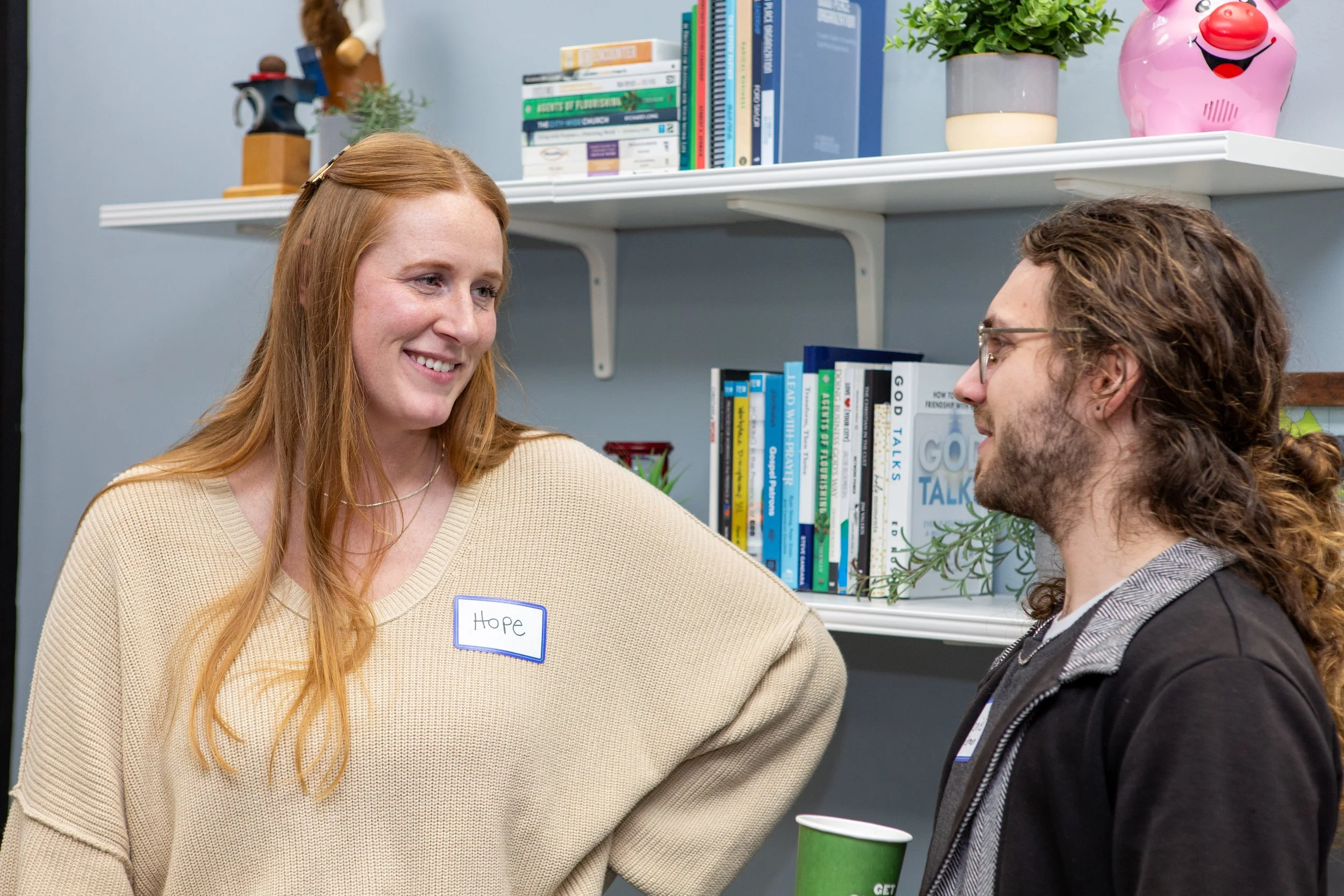
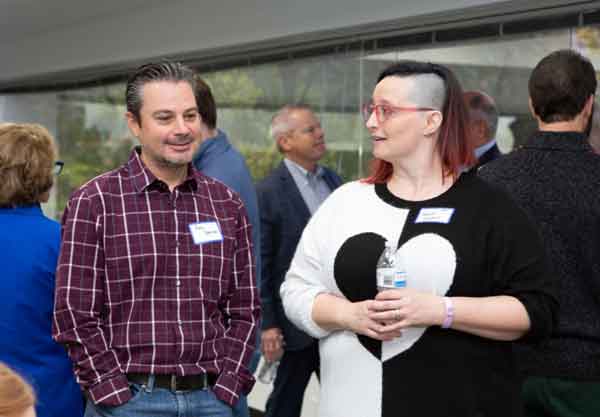

One small practice we’ve encouraged this year is simple by design: once a month, we invite our team members to sit down with someone outside their day-to-day circle. It could be coffee or lunch, or even for dinner, and there’s no set agenda.
The aim isn’t transactional, it’s relational. That’s because we recognize growth happens when people are exposed to a dynamic network with fresh faces, new stories, and ideas they wouldn’t otherwise encounter in the rhythm of regular work, often behind a screen.
Over time, those conversations stretch how we think, how we lead, and how we show up, and that’s not just in our roles within a business, but as people.
This new practice we’re taking on reflects something bigger we’ve been thinking about as a company: if we want people to keep growing, we must be willing to rethink how work happens.
Choosing Curiosity Over Comfort
It’s easy for organizations to settle into familiar patterns. Perhaps “the way it’s always been” goes unquestioned. “This is how we’ve always done it” can become the norm, even with the best of intentions.
We’re trying to do all we can to avoid that. After all, one of our beliefs is that “We do not accept the status quo; we do what works.” Part of our thinking is that complacency is rarely good for people. Growth requires curiosity, and going outside your comfort zone (which also happens to be a topic in a book we’re also reading together as a team). It requires asking the question: is there a better way?
Here are a few other areas where we’ve intentionally challenged “traditional” ways of operating a business:
Transparency Builds Ownership
For many businesses, financial information stays behind closed doors. The belief is that less visibility equals…well, less risk.
But we believe the opposite. When employees understand how the business is doing, they make better decisions, plain and simple. Transparency helps people see what they’re building together.
Timely Feedback
The traditional annual performance review asks people to recall months of work and growth in a single conversation. And let’s face it: many people dread that annual conversation, for the most part. That’s a lot of pressure, and often, not very helpful to the employee receiving the feedback.
We’ve found that feedback is more effective when it’s shared in the moment, with care, deep compassion for where someone is coming from, and with respect. (Worth repeating: with great care exercised to protect individual self-esteem.) Ongoing conversations allow people to grow and learn, while still honoring who someone is as an individual.
Give Away Trust
Procedures and policies have a way of multiplying over time, don’t they? And, arguably, at their worst, they can treat people like they aren’t self-managing, capable people.
We do need reasonable compliance oversight, but compliance should be reasonable and necessary, and in my opinion, should come from a place where we assume positive intent from our people.
That doesn’t eliminate accountability, but it reframes it. When trust comes first, people tend to rise to the occasion. They take responsibility not because they’re required to, but because they feel respected, and because they feel pride in what they do.
Freedom Fuels Better Work
Command-and-control leadership may give the allusion of control to some leaders, but it rarely produces creativity.
We believe people do their best work when they’re trusted with autonomy and freedom. When they’re given room to think, solve problems, and apply their strengths, the impact is deeper and more sustainable.
Stewardship Over Ownership
One idea that continues to shape our thinking is stewardship. Rather than viewing a business solely as something we “own” or solely an “asset”, stewardship asks us to care for what’s been entrusted to us, namely people, resources, influence, with responsibility and generosity.
Breaking Down Walls
Silos can undermine even the best teams. When information is guarded, progress slows.
We’re learning that shared knowledge, open communication, and collective wins are deeply impactful. When people understand what others are working on (and why!), alignment follows.
A Question Worth Asking
The monthly coffee conversations are just one small expression of a bigger commitment: to keep learning, keep growing, and keep rethinking how we develop and care for people in our organizations.
To that end, I’ll end with this question: What new ways are you exploring, in order to develop leaders in your organization? How are you approaching business differently in your company? Has that mindset changed in recent years?
Sometimes growth begins with nothing more than an open seat at the table, and of course, a willingness to listen.