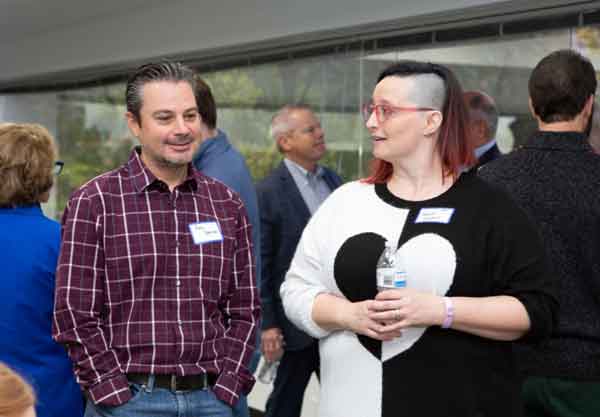


It does not take an expert to know that loneliness is real in our society and increasing.
It also does not take too much to note that it is not limited to remote work, even though remote work often gets the blame.
Over the past few years, I’ve noticed something subtle happening in conversations about work and culture amidst my peers. It does not matter if someone works in-person, hybrid, or remote – a lot of peoples’ sources of community have shifted from in-person everything to technology driven avenues. This could be social media, online church, facetime over a catch-up coffee, and the list goes on.
Because humans are hardwired to desire real life interaction, people have started to expect their jobs to do more than they were ever designed to do. In some cases, asking work to become a replacement for community, belonging, and even identity.
That expectation may be understandable. But it’s also creating unhealthy dynamics for everyone involved.
Work Was Never Meant to Carry That Weight
For many people, work used to be one part of a much larger ecosystem: family, faith, neighbors, friendships. As those structures have weakened or become harder to maintain with changes in the culture, work has quietly taken on a more emotional responsibility.
There are three areas that I believe every working professional desires to feel in their everyday life:
-
Proven Purpose
-
Affirmed Calling
-
Connection with people who care
None of those desires are wrong. But I would like to propose that they are not supposed to be answered through work… Now don’t be mistaken… Work does have to do with these things, but not in the way we think.
Work is supposed to be the overflow of us getting these answered elsewhere. We don’t stop caring about our jobs because we get these desired fulfilled elseware. We work harder, with more purpose, and with more security when it is found somewhere else. When work becomes the primary place where those needs must be met, tension builds… and it often shows up as disappointment.
Work simply isn’t built to carry the full weight of community.
Everyone Loses
When organizations are expected to function as communities, they’re placed in an impossible position.
Leaders feel pressure to create emotional fulfillment rather than clarity and direction. Teams feel disappointed when work doesn’t deliver the depth they’re craving. Boundaries blur. Expectations go unspoken. Culture can become performative instead of grounded. Everyone loses.
Now what organizations can do, is they can be intentional to bring people’s personal endeavors and communities to the forefront of the conversation. Give opportunities for people to not only be known in their personal walk but also be empowered to live it more vibrantly. By doing this we think we lose them to their personal life vs work life, but actually we’ve made them more engaged. Inviting them into a world where work is a place that magnifies whole-life balance rather than preventing it.
When work tries to replace community, it usually delivers a diluted version of both.
The Difference Between Connection and Replacement
To reiterate… Work can foster connection.
But work should not be expected to replace:
-
Friendships that see your most painful and most joyful moments
-
Passions that cannot be paid
-
Identity beyond a job title
Healthy workplaces don’t promise to meet every human need… they create enough stability and respect that people have the capacity to build full lives outside of work.
A Healthier Way Forward
I’ve been thinking a lot about how often we celebrate the “package” a company offers, the salary, the benefits, the perks, without asking what it costs on the other side. If the tradeoff is your mental health or your ability to have a life outside of work, that’s not a success story.
If loneliness is present, and it is, the solution isn’t to ask work to absorb it.
The healthier approach is to:
-
Build workplaces that care about what you do outside of the job
-
Encourage boundaries that allow people to invest elsewhere
-
Reduce friction so work doesn’t drain energy needed for community
When work stays in its proper place, it can actually support richer lives instead of competing with them.
I love Edoc, because we believe ethical principles shape how people experience work, not by replacing community, but by making room for it.